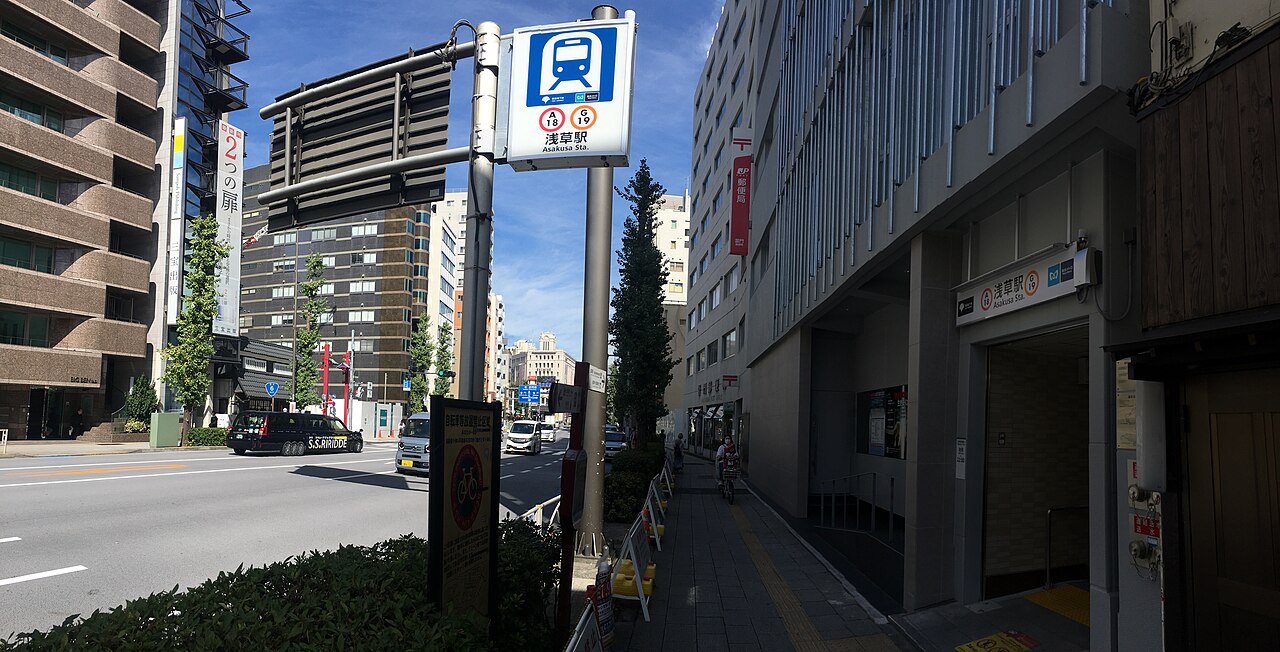
Asakusa station
浅草Bureau of Transportation, Tokyo Metropolitan Government
Asakusa on the Tokyo map
About Asakusa
Asakusa is one of the birthplaces of the Japanese subway. On December 30, 1927, an underground line opened between Asakusa and Ueno, the first stretch of today's Ginza line and the first project of its kind in Asia. The station then served a district already famous for the Sensō-ji temple, its theaters, and its places of entertainment. Toei added the Asakusa line in 1960, creating a second underground identity connected to the first. Nearby, the Tobu terminal serves Nikko and the north of the region. Together they now link old working-class Tokyo, contemporary tourist routes, and several generations of railway infrastructure.
At the 1927 opening, the Asakusa–Ueno trip lasted only a few minutes, but the novelty drew an immense crowd. The first travelers reportedly sometimes waited nearly two hours to experience this short underground journey.
- Opening
- 1927
- Heritage
- First subway in Asia
- Neighborhood
- Sensō-ji and old Tokyo
Sources
2Tokyo Metro
Asakusa StationWikipedia
Asakusa Station
Lines calling at Asakusa
Neighbouring stops
- GGinza Line
- AAsakusa Line
Connections
- Tobu SKYTREE Line
External network
Not playable